
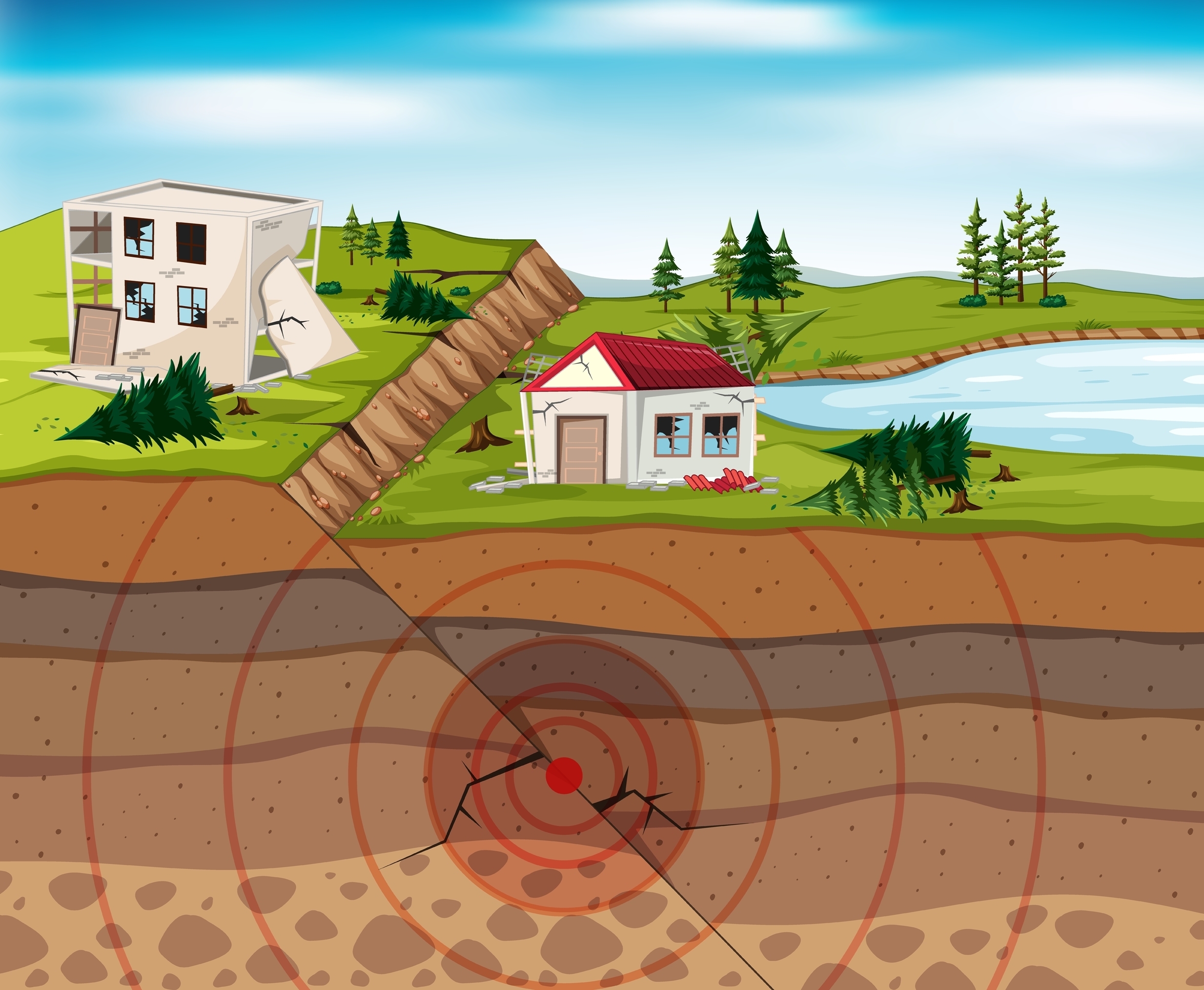
A small earthquake is a good nudge to check the things that are easy to forget when you live on an island or peninsula: why your phone may stay silent, how your family reconnects if the ferries stop, knowing your neighbors and your shutoffs, a few weekend fixes, the questions to ask about earthquake insurance, and what buyers and sellers should keep in mind. Plus local resources on Bainbridge and across Kitsap County.
The September 29 earthquake was small, and thankfully, no damage was reported. But if you felt it, it probably got your attention.
It got mine.
We live in a place where we think about ferry schedules, winter storms, and power outages all the time. Earthquakes are different. We know they’re possible, but unless the ground actually moves, it’s pretty easy not to think about them.
So this one felt like a good reminder to take a look at a few things we tend to put off.
Do you know where your utility shutoffs are? If the ferries stopped running for a while, would everyone in your family know where to go or how to reconnect? Have you actually looked at your emergency supplies lately?
None of that is meant to sound dramatic. It’s just the practical side of living here.
And while I’m writing this from Bainbridge Island, most of it applies anywhere in Kitsap County.
What happened
A magnitude 4.2 earthquake hit on the afternoon of September 29 near the Key Peninsula and was felt across much of Puget Sound.
It wasn’t a damaging earthquake, and the Pacific Northwest Seismic Network said there was no indication it meant a larger quake was coming.
Mostly, it was a reminder.
If you’ve been meaning to update your emergency kit, figure out a family plan, or take care of a few things around the house, this is probably as good a time as any.
Five things that are easy to forget when you live here
1. Your phone may not warn you
I think a lot of us assume our phones will automatically alert us before an earthquake. That isn’t always the case.
The September quake didn’t trigger a wireless emergency alert. Depending on the size of the earthquake and the shaking expected where you are, you may or may not get a warning.
If you haven’t already, it’s worth downloading the free MyShake app. Even a few seconds of warning can give you time to drop, cover, and hold on.
2. We have water between a lot of us
This is one of those things that’s particularly easy to overlook here.
Someone in your household may work in Seattle. A child may be at school. You may be in Silverdale, Poulsbo, Bremerton, or on the other side of a bridge when something happens.
If the ferries or bridges were temporarily out of service, what would everyone do?
It’s worth having that conversation before you need it. Where would you meet? Who would pick up the kids? Is there someone outside the area everyone could contact if local calls aren’t going through?
3. Help may not come right away
This is one of the reasons neighborhood preparedness matters so much here.
On Bainbridge, we have one bridge off the island, ferry service to Seattle, and plenty of roads that can be blocked by downed trees. In other parts of Kitsap, the roads may be open but still leave you a long way from where emergency crews are needed most.
After a major earthquake, help may not be able to get everywhere right away.
That means the people closest to you may be the people you rely on first.
Who nearby has a generator? Who has medical training? Who owns a chainsaw? Who lives alone and might need someone to check on them?
You don’t need to turn your neighborhood into a disaster-response operation. But knowing who is around you, and what resources are nearby, could matter a lot if roads, ferries, power, or communications are disrupted.
4. Know where your shutoffs are
This is simple, but how many of us actually know exactly where everything is?
Find your water shutoff and electrical panel. If your home has natural gas or propane, know where that shutoff is too, and find out from your utility or propane provider when you should and shouldn’t use it.
That’s the kind of thing that’s easy to figure out now and much harder when you’re standing in the dark with no power.
5. Don’t forget the family members who can’t pack for themselves
Pets need a plan too.
Keep some food, water, medications, a leash or carrier, vaccination information, and a recent photo with your emergency supplies.
And yes, that means Coco needs a go-bag too.
None of these things is particularly complicated. They’re just remarkably easy to put off until the next time something shakes.
Quick wins for this weekend
You don’t need to turn this into a whole project. A few of the most useful things are pretty simple.
- Strap the water heater. If it tips during an earthquake, it can damage water or gas lines. If yours isn’t strapped, this is one of those relatively easy fixes that’s worth doing.
- Anchor the things that could fall. Tall bookcases, dressers, TVs, and heavy items stored up high are the obvious ones. Cabinet latches can also help keep glassware and other breakables from ending up on the floor.
- Put shoes and a flashlight by the bed. This one sounds almost too simple, but if glass breaks during the night, the last thing you want to do is walk through a dark house barefoot.
- Take a look at your emergency supplies. Not build the perfect kit. Just see what you actually have. Water, food, medications, flashlights, batteries, first-aid supplies, some cash, and copies of important documents are a good place to start.
If your kit has been sitting untouched for a few years, check expiration dates while you’re in there. I’m pretty sure emergency crackers from 2019 don’t improve with age.
Bigger projects: questions for a licensed contractor
Some earthquake upgrades go beyond the easy weekend fixes. If you’re wondering about the structure of your home, that’s the point where you want a licensed contractor or structural engineer looking at the actual property.
A few good questions to ask:
- Is the house bolted to the foundation?
- Are there short cripple walls in the crawlspace, and if so, are they properly braced?
- Is the chimney in good condition, and does it need reinforcement or bracing?
- Will the work require a permit?
- If it does, who is pulling it?
- What documentation will I receive when the work is complete?
That last one is worth paying attention to.
If you spend the money to improve the home, keep the paperwork. Contractor invoices, permits, final inspections, and any engineer’s letter can all matter later when you sell.
For a good plain-language overview of common earthquake retrofits, FEMA has an Earthquake Safety at Home guide.
Earthquake insurance: a conversation worth having
Most standard homeowners policies don’t cover earthquake damage, so if you want that protection, you’ll usually need separate earthquake coverage or an endorsement added to your policy.
The part that catches people off guard is often the deductible.
Earthquake deductibles are commonly a percentage of the home’s insured value rather than a flat dollar amount. So if your home is insured for $800,000 and your deductible is 15%, you’re responsible for the first $120,000 of covered damage.
That’s a big enough number that this probably shouldn’t be a five-minute decision.
Instead, ask your insurance agent:
- What would earthquake coverage cost for my home?
- Would it be a separate policy or an endorsement?
- What deductible options are available?
- Does the deductible apply separately to the house, personal property, or detached structures?
- Would the policy help with additional living expenses if we couldn’t stay in the home?
Whether earthquake insurance makes sense is going to depend on the house, your equity, the cost of coverage, and your own comfort with risk.
The Washington State Office of the Insurance Commissioner has a helpful consumer guide to earthquake insurance.
If you’re buying
A standard home inspection is not the same thing as a seismic evaluation, but it can still give you useful clues.
An inspector may note whether the water heater is strapped, whether foundation bolts are visible, or whether there are concerns about the chimney or other parts of the structure. It may make sense to bring in a structural engineer while you’re still within your inspection period.
I’d also pay attention to the seller disclosure and any records the seller has for past repairs or retrofit work. If someone has already spent money on seismic improvements, ask for the permits, invoices, final inspections, or engineer’s reports that go with it.
If you think you may want earthquake insurance, get a quote before your inspection contingency is over. That way you know what the cost looks like while you’re still evaluating the home, not after you own it.
It’s one more piece of the overall picture when you’re deciding whether a home makes sense for you.
If you’re selling
If you’ve had seismic work done, provide the paperwork.
Contractor invoices, permits, final inspection sign-offs, and any engineer’s letters are all worth saving. When it’s time to sell, those records can help buyers understand what was done and give their inspector something concrete to review.
The more clearly you can show what was done, when it was done, and who did it, the fewer unanswered questions a buyer has to fill in for themselves.
And as with any past damage or repairs, be accurate on the seller disclosure and talk with your listing broker about anything you’re unsure how to address.
Local resources
If this earthquake was your reminder to get a little more prepared, there are some really good local resources.
On Bainbridge Island
Bainbridge Prepares is probably the best place to start. You can find your closest Disaster Hub, learn about Map Your Neighborhood, and find practical preparedness information for your household.
If you’re not sure whether your neighborhood is already mapped, check first. If it isn’t, Bainbridge Prepares can help you get one started.
There’s also a free Map Your Neighborhood session at the Bainbridge Public Library on Tuesday, October 20, 2026, from 6:00 to 7:00 p.m. If you’ve been curious about how the program works, that would be an easy way to learn more.
And make sure you’re signed up for the City’s emergency alerts. Bainbridge Island uses Nixle for emergencies and other urgent information. You can sign up by texting 98110 to 888777.
Elsewhere in Kitsap County
The Kitsap County Department of Emergency Management is a good starting point for countywide alerts, emergency planning, Map Your Neighborhood information, and CERT training.
The Pacific Northwest Seismic Network is also useful if you want to learn more about earthquakes in our region or report what you felt after one.
And if you haven’t downloaded MyShake yet, it’s free for both Apple and Android.
One thing at a time
You don’t need to tackle everything on this list at once.
The point is simply to be a little more prepared than you were before the ground moved.
If you’re buying or selling and have questions about what to look for, or how previous retrofit work may come up in a transaction, I’m happy to talk it through.
Let’s talk about your real estate plans. You can also reach me at (206) 347-0427 or [email protected].
What did this earthquake remind you that you’ve been meaning to take care of?
About Lori Sinclair, Managing Broker, REALTOR®
Lori Sinclair is a Managing Broker with Realogics Sotheby’s International Realty, serving buyers, sellers, and property owners on Bainbridge Island and throughout Kitsap County, Washington. Licensed since 1998, she brings nearly three decades of real estate experience. She built a successful real estate business in Houston, then stepped away to build a multimillion-dollar automation company with her husband, which they sold to an international engineering firm in 2019. Lori then moved to Washington and returned to real estate, and she has served Bainbridge Island and Kitsap County for more than six years.
Lori serves as Treasurer of Washington REALTORS® and State Liaison for Women’s Council of REALTORS® Washington. She is a Past President of the Kitsap County Association of REALTORS®, the association’s 2024 REALTOR® of the Year, and was voted Best Real Estate Agent in Best of Bainbridge 2023. As an Accredited Buyer’s Representative (ABR®), she helps buyers understand what a home’s condition and history mean before they commit.
Move Smart. Move Forward.
Realogics Sotheby’s International Realty · Equal Housing Opportunity
This article provides general information about earthquake preparedness and is not insurance, engineering, construction, or legal advice. For decisions about coverage, retrofits, or disclosures, consult a licensed insurance agent, contractor, structural engineer, or attorney as appropriate. Earthquake details and local resources are accurate as of publication; check the linked agencies for current information.